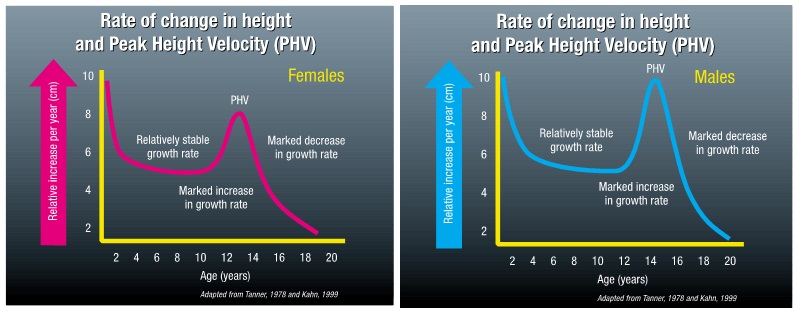
For many years I have tracked the height of the young athletes I work with. I would do it by simply observing how many centimetres each year an athlete had grown. I was taught that a typical amount of growth per year for a child was around 5cm. If it shot up to 7-8cm that was a good indicator that child was going through some accelerated growth.
But of course to know what their ‘PHV’ is you would need to track it for a number of years to get a feel for what is normal? Right? Well no….actually. I talk about the Maturity Offset Calculation in my latest Daz Dee TV episode 1 where I refer to Peak Height Velocity (around 4:00 minutes in).
”The maturity offset can be used to calculate a child’s age of PHV, which is commonly used by strength and conditioning coaches and sports scientists to adapt their training prescription. Thus, understanding PHV and monitoring your athletes’ maturity offset (age of PHV) is highly-encouraged. It is also recommended that the maturity offset is calculated approximately 2-3 times per year.” Science for Sport.
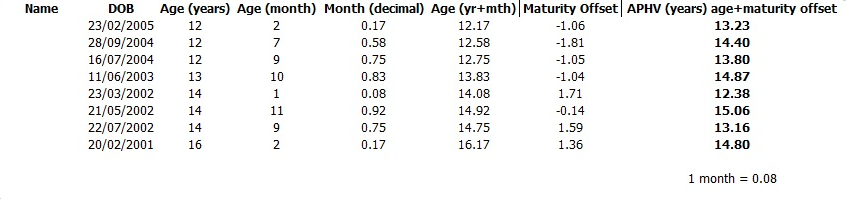
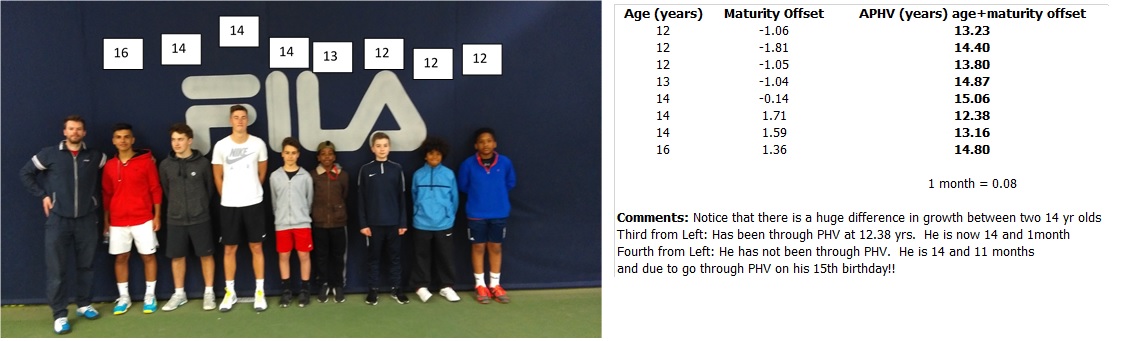
Basically, I have 8 boys in the Full-time Junior Academy group at Gosling Tennis Academy that are between 12 and 16 years. I have listed them from youngest to oldest. Not surprisingly three of the four oldest boys have a positive Maturity Offset value indicating that it is >1 year since they have ALREADY HAD their Peak height velocity. However, interestingly one of the boys who is nearly 15 is still one of the smallest and is ‘predicted’ to go through his growth spurt any time soon. The rest have negative offset values indicating they haven’t yet had their PHV and the it is predicted as just over a year away for most of them, and nearer 2 years (1.81) for one remaining athlete.
Here is the picture:Unfortunately one of the boys stood in the wrong place!!! The tallest boy in the shot should have switched with the 14 year old in red shorts- I have corrected the scores on the right side to correspond with the place they are in the picture.
Ignore me- I just wanted to photo bomb the moment. I’m far left so don’t count me when you’re scanning Left to Right!!
Hope that was useful. Try it out with your own athletes!!!
Last weekend, I attended the Child to Champion LTAD conference in Gloucester. It was hosted by ProFormance which is run in the UK by James Baker & in the US by Mike Young. For those of you who couldn’t make it please find below a few bullet-point notes from the sessions I attended. I will go on record and say this is probably the best conference I have attended. Every presentation was insightful and I took something away from every single one!
And as a special bonus I have also included a review from my colleague in British Tennis Arran Peck who attended the inaugural conference in 2016!!
2017
First of all shout out to Andy Bruce who did a cool conference review with a summary of the twitter feed that was blowing up on the day #childtochampion
Here are my top take home messages from a few of the 16 presentations that I heard throughout the weekend.
Pre Conference Friday April 7th
Dr. Mike Young – Owner & founder of Athletic Lab Sports Performance Training Center – ‘Means and Methods of Eccentric training’
Eccentric training increases concentric strength but concentric strength training does not increase eccentric strength levels
An athlete’s ability to resist yielding is the key to athletic success
We typically assess strength using concentric assessment such as 1-Repetition Maximums (RM). But the better question to ask is how strong someone is eccentrically
Many methods to develop eccentric strength: Eccentric training- controlled descent with submax loads (@85%1RM) => Accentuated loading (110-120% 1RM) => Shock method (snatch balance) => Flywheel => Partial reps
Saturday April 8th
Alex Natera – Senior S&C coach at Aspire Academy, Qatar – ‘Strength and Power in the Elite Student Athlete’
Relentless pursuit of maximal strength when you’re already strong may be a waste of time
Advanced lifters can continue to get stronger by making skill development improvements rather than capacity improvements
Use ‘link’ assessments to gauge transfer of strength- a loaded skill that is very similar to the sport skill i.e., timed prowler push for assessing strength gains in acceleration
Single leg loaded squats can be a clever way to overload the system while using lower loads- keeps the technical coach happier nearer important competitions
Eccentric training- use it or lose it. After 4 weeks it detrains so don’t assume sprinting will be sufficient to maintain the strength gains made in previous cycles- it won’t
Allan MacDonald – Senior S&C coach at British Judo – ‘The Psychological Characteristics of Developing Excellence’
Reverse engineer the behaviours we want to see in our young athletes. Banning mobiles from the gym doesn’t the challenge self-awareness and self-regulation
Trauma creates talent (psychologically)? Do you have to go through adversity to grow and learn to cope with stress? Trauma only helps if you can come out the other side i.e have the psychological tools
Matt Depledge – S&C coach at Southampton AFC– ‘The Application of Growth and Maturation in Academy Football
Use Khamis & Roche (1994) Method to calculate Percentage of Predicted Adult Height (PAH)
Use Mirwald (2002) Formula to calculate Maturity offset value
Paul Caldbeck – Senior S&C coach at West Bromwich Albion FC – ‘Carpe Diem- Are Academy Footballers Fit for Purpose’
The stronger and fitter you are the faster you recover
Pre-season versus In-season: Less High Intensity running volume and More lower intensity running
For young players coming up into First team besides the overall higher training loads the biggest challenge is the speed of the game. It is faster and there is higher volume of sprinting
Sunday April 9th
Des Ryan – Head of Sport Science and Medicine, Arsenal AFC – ‘The Arsenal Physical Development Framework’
Increase complexity of an exercise (as opposed to just adding load) when kids are going through peak height velocity
FMS scores seem to stall during PHV but soon pick up afterwards
FMS scores do not predict injuries but are important way to monitor quality of movement which is related to athletic performance. Better movers are better able to acquire more complex skills
Dr James McCarron – Head of Academy Performance, Sunderland AFC– ‘Implicit and Explicit Aspects of Athletic Development’
Implicit and explicit both effective. Explicit learning seems to be more effective as athlete matures. Both can be periodised in training week and effective for athlete undergoing rehab to increase cognitive load when physical load is low.
Pete Atkinson – National Lead for S&C at England & Wales Cricket Board (ECB).– ‘An Insight to the ECB Pace Programme: Preparing the next generation of International Fast Bowlers’
Player-led not programme-led strategy
If we measure it- we report it!
Bernstein’s (1967) theory of repetition without repetition- variability by another name!
2016
Dr Rhodri Lloyd – Senior Lecturer at Cardiff Met University – ‘Plyometric Training & the Young Athlete’
Extensive evidence of increase in bone mass, bone mineral accrual & bone mineral density resulting from plyometric interventions BUT beware of intensity, volume & fatigue. Technical breakdown is most reliable ‘red-flag’
Plyometric exercises play an important role in injury prevention and economy NOT JUST increased explosive qualities
“We cannot always build the future for our youth, but we can build our youth for the future” (Franklin D Roosevelt, 1940)
Dr Mike Young – Founder of EliteTrack.com & owner of HPC Athletic Lab – ‘Best Practises For Developing Speed Across the Developmental Continuum’
Speed has both mechanical & physical constraints: <MASS + >FORCE + <TIME + right direction = RUN FASTER
You need a functioning athlete before you equip them to run ‘insanely’ fast – design, build, optimize and only THEN maximise!!!
Reduced total VOLUME, increased rep DISTANCE and increased REST between reps as athlete gets better / faster
Dr Neil Potts – Head of Athletic Performance at Scottish Rugby – ‘Building & Implementing A System To Produce International Rugby Players’
Focus on the CONTROLLABLES and maximise the ‘bang for your buck’
Do the simple things VERY well & create a legacy that survives you in the role
Develop an EXCELLENCE culture in particular self-reliance, professional standards & continual evolution
Dr Ian Jeffries – Director of Athletic Performance at Powys Sports Academy, Wales – ‘Effective movement in sport’
Why tunnel athletic development with the use of ‘Long term’??? Need to see change now, not at some far away point in the future
Beware the EXECUTION gap (there are too many models and not enough action) as well as the “perilous allure of the new!!!”
Start with the sport & / or a skill and identify opportunities to improve it
Shane Murphy – U21’s Sports Scientist, Manchester City FC – ‘Peak Height Velocity & Injury’
Weekly player ‘case conferences’ scheduled to discuss player attitude, development & performance
Normal, modified and restricted training resulting from Training Load monitoring
Strong advocates of ‘alternate’ and ‘education’ sessions throughout Academy week & season
Kevin Paxton – Head of Academy Sports Science, Leicester City FC – ‘Age-Related Performance Benchmarking’
Importance of good recruitment – need staff who are good TEACHERS & want to work with young players
Data collected must inform practice & improve performance otherwise irrelevant
SIMPLIFY your plans and programmes otherwise trainers, coaches and players won’t stick to them
In closing, it is important to note that the whole weekend was well organised, everyone was extremely generous with their time, experiences and intellectual property and the delegate cost was very reasonable. I would definitely recommend you follow both James and Mike on Twitter for discussions and updates on the subject of LTAD and would encourage you to book onto the 2018 conference as and if one is proposed. Please do not hesitate to contact me if you require any clarifications on the comments above or have any questions about.
https://athleticperformanceacademy.co.uk/wp-content/uploads/2017/04/Child-to-Champion2.jpg698960dazdrakehttps://athleticperformanceacademy.co.uk/wp-content/uploads/2015/05/APA-Logo1-300x156.jpgdazdrake2017-04-19 21:02:072017-04-23 12:12:30Child to Champion 2017 Conference Review
Dr. Mike Young: Motor Learning Concepts All Coaches Should Know & Understand
I encourage everyone to have a look at this webinar. Below are the summary notes I have written having watched it myself.
What is Skill?
In the field, ”be able to accomplish a task with great movement efficiency.”
But…..performance alone is not indicative of skill. You could be a seriously fast runner but highly unskilled at running- with poor running mechanics. They may have great genes and a really big engine.
On the flip side you can have a highly skilled athletes but lacks the physical parameters- they don’t have the strength or the stamina but they do have the movement patterns correct
Performance is ultimately the intersection of your mechnical proficiency and how big of an engine you have.
Muscle memory does not exist– i.e., learning a skill and storing the information in the muscles. The skill itself (motor pattern) and the neural connections occur in the brain.
However, Movement memory does exist
Many of the things that hold true for cognitive learning are the same for motor learning.
TRUE LEARNING IS ASSESSED BY RETENTION– usually in the 48 hour period post practice
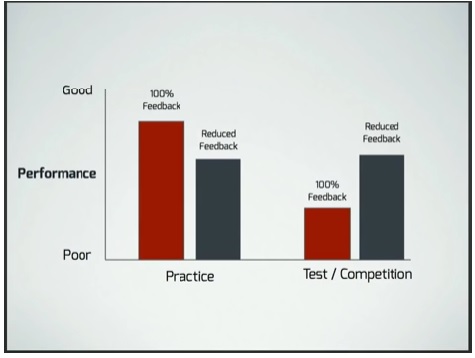
For a coach: they may assess Practice versus Competition ability? Can they do it in a match?
The Skill acquisition paradox
– many of the things we think we are doing to benefit our athletes may actually be hindering their long term performance when it comes to motor learning
– A lot of the things we do with cueing and feedback etc get in the way of long term continuous improvement
many of the tactics that we use to enhance skill actually impede true skill acquisition
-The reason is that we are fooled into believing that immediate improvements are indicative of true learning
-The very things that improve performance acutely are often the opposite of what should be done to enhance true skill acquisition
Feedback recommendations
Type– Knowledge of Results (KR) versus Knowledge of Performance (KP)
Timing- Concurrent (during) versus Terminal (after)
Quantity
Frequency
Type:
KR- Tell them what they did (Outcome- 3.00 sec for 20m sprint) versus KP-How they did it (Process-you got into a great acceleration position)
It is best to focus on the KP- actionable processes that they can change
Timing:
During repeated cyclical continuous task- such as running you could provide feedback during the task. But generally it is best to give feedback after the task especially for acyclical task.
It is generally better to wait to provide feedback at the end.
Quantity:
Quality over Quantity: Clear- Concise- Concrete
Can it be understood by a young child?
Frequency:
Yes beginners will benefit from more feedback but we need to wean them off it!
-Less frequent feedback may be beneficial
-May create dependence on feedback
-Figure it out on your own!
If you give lots of feedback it will help short term performance (in the practice) but not help longer term performance
Attentional focus
Internal (reference to the body- bent your arms to 90 degrees) versus External cueing (provide a global reference- ”push the ground away from you”, ”jump and touch the ceiling”) . Our tendency is to provide internal cues but the research is overwhelmingly in support of providing external cues to improve both skill acquisition and performance.
”Jump to this point” or ”Push the ground away from you” is better than ”when you take off I want you to straighten your legs fully”
Internal references that are typically popular to talk about in textbooks when discussing the technical checklist such as angles at the joints, body positions etc need to be translated into external cues.
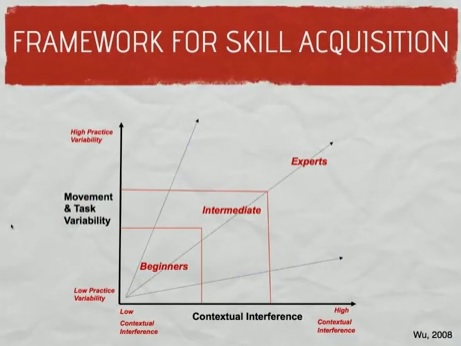
Contextual interference
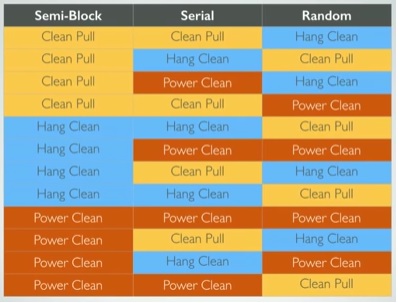
Blocked practice versus Random practice
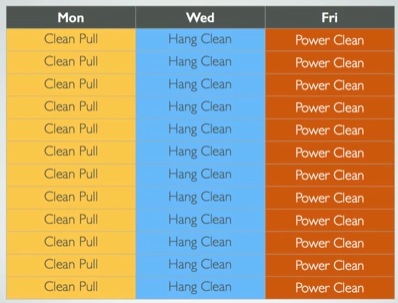
Blocked:
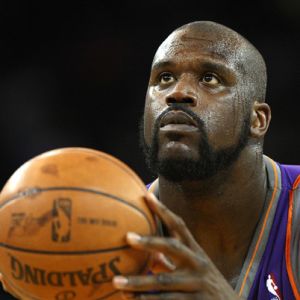
It is well documented that Shaquille O’ Neal followed this regime and it allowed him to make 80% of his free throws in practice. But in matches he was only able to make 50%. This may be suitable to beginners.
Random:
More suited to athletes who are increasingly skilled
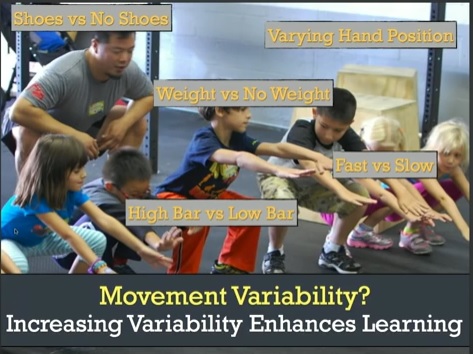
Movement variability
Don’t keep movement patterns the same all the time!
Summary
Performance is ultimately the intersection of your mechnical proficiency and how big of an engine you have
Many of the things we think we are doing to benefit our athletes may actually be hindering their long term performance when it comes to motor learning
https://athleticperformanceacademy.co.uk/wp-content/uploads/2017/02/musclememory.jpg318377dazdrakehttps://athleticperformanceacademy.co.uk/wp-content/uploads/2015/05/APA-Logo1-300x156.jpgdazdrake2017-02-23 12:06:402018-05-27 20:12:26Motor Learning Concepts all coaches need to know about
Coaches- please give your attention to the Job Advert below. Anyone interested should contact me immediately and submit their CV for consideration as this role is for an immediate start.
https://athleticperformanceacademy.co.uk/wp-content/uploads/2017/01/Better-GLL.jpg500500dazdrakehttps://athleticperformanceacademy.co.uk/wp-content/uploads/2015/05/APA-Logo1-300x156.jpgdazdrake2017-01-30 18:49:222017-01-30 18:49:22Job Opportunity with APA- Sutton Tennis Academy
For anyone who follows this blog you know that I am passionate about Youth Strength & Conditioning and applying sound principles based on Long-Term Athlete Development (LTAD) models. At this part of the training phase (term 2 in the academic timetable) January-April, it is a pretty fun time. All my interns have spent the first term bedding in and learning about the ‘art’ of coaching- learning how to improve their communication skills.
This term is more about giving them more ownership of their session plans so I have been giving them some insights into the thought process behind the syllabus themes. They then need to write their own plan. I thought I would share those insights here.
Youth Training with Athletic Performance Academy
Our after school programme caters for all ages from 5 year olds up to senior high school athletes.
>Mini Academy
>12U Junior Academy
>18U Junior Academy
All the sessions are 1 hour and we run a daily session before the tennis squad, so there is the possibility to attend all five sessions.
Session Plan Structure
SUPPLENESSPart of warm-up:
Raise
pulse raising game
Activate/Mobilise
bands/crawling
Potentiate
widths / reaction speed
Main session:
SKILL
(coordination) > (balance)
SPEED
(First step speed)>(Straight ahead speed)
AGILITY
(multi-directional speed) > (sport specific speed)
STRENGTH
(Animals/Gymnastics/Partner work/Bars)
STAMINA
GAME
What is Skill?
One of the things that I am really passionate about is Skill development- I honestly think it is a part of the physical literacy spectrum that coaches understand less well. I think we have all heard of ABCS- but how many of us are working on it?
It might be worthwhile some of you checking out some of these videos for some inspiration.
**Author’s Caveat**
I am NOT endorsing all exercises, in all situations and some of the quality of execution is not of a level I would be satisfied with. You can debate which exercises might be too advanced, but that is ultimately based on your own beliefs. But take away the principles of Multilateral development (general instead of early sport specialisation) which is advantageous through :
Expanding repertoires of behaviours and experiences
Harmonious development of the structures of the central nervous system and all the senses
Prevention of asymmetries and pattern overload
Variation to avoid early burnout
Sports coach UK
Ajax Football 1990s
Russian Ice Hockey
Club Brugge
Putting it into an Annual Plan
Following personal communication with James Baker (Proformance Strength & Conditioning) we discussed which types of fitness we like to focus on throughout the year. James has a little bit less contact time with his athletes than I do.
To use Speed as an example, he works in a High School where the summer term is focused on Athletics so there is a natural build up to top speed work. Whereas with my athletes in tennis we focus on shorter distances with a build up to more specific tennis footwork.
Proformance S&C:
Term 1: Mobility => Jump Training => Term 2: Straight Ahead Speed (Linear)- Accelerations => Multi-Directional Speed => Term 3: Straight Ahead Speed (Linear)- Max Velocity => Energy System Development
Athletic Performance Academy:
Term 1: Multi-directional Speed (Intro to stopping/turns)=> First step speed => Term 2: Straight Ahead Speed (Linear)- Accelerations => Multi-Directional Speed (cutting) => Term 3: Multi-Directional Speed (cutting) => Tennis Footwork
Find Out More
For more information on the different types of speed and the drills we use with Youth athletes sign up to the next APA workshop
Date: February 19th 2017 9am-1pm
Venue: Gosling Sports Park, Welwyn Garden City
Cost: £40
https://athleticperformanceacademy.co.uk/wp-content/uploads/2017/01/Fundamental-Movement-skills.jpg305407dazdrakehttps://athleticperformanceacademy.co.uk/wp-content/uploads/2015/05/APA-Logo1-300x156.jpgdazdrake2017-01-26 13:08:152018-05-27 20:12:26Youth Training ideas- Fundamentals of Movement
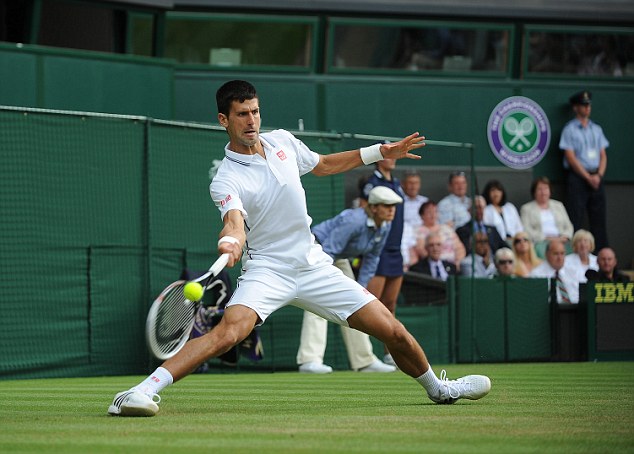
If you’re like me you love to play sport, the competitive challenge of testing your skills and physical attributes against a worthy opponent. Sport is a fast paced affair- and anyone who plays sport loves the speed of the game.
I was recently talking to one of my coaches and he was raving about some of the more ‘sport specific’ speed drills and medicine ball drills he saw me doing with some tennis players. I was worried that his take away message was that all tennis players should be doing for training is just very specific speed and strength drills. This debate is a bit like the one about free play and fitness – where it is argued that the best type of fitness for a sport is just playing the sport itself.
The essence of sports activities lies in the movements of the human body. A sport movement is a complex motor action (movement). In team sports or sports like Tennis it may be necessary to solve many motor tasks. To do this we have to learn ‘movement patterns’- a sequence of movements arranged in time and space- which when put together make up a familiar sports movement. This requires coordination.
In general, we all aspire to increase the speed at which we can perform these sporting movements. So if the name of the game is mastery of the sporting movement at speed why don’t we just imitate the sporting movements in the gym all the time? Well you see, speed of movement is really only the outcome of the ability to do something very important first. To change your body position (gravitational centre of mass) or modify limb position in space, an athlete has to overcome the forces of gravity and inertia.
In order to increase speed, the athlete must develop an adequate level of force.
Therefore the final goal of training is always related to the capacity to express power– produced by:
Force of overcoming external resistance
Skill to coordinate the effort
Speed of movements
This capacity to overcome resistance at speed is known as your ‘motor potential.’
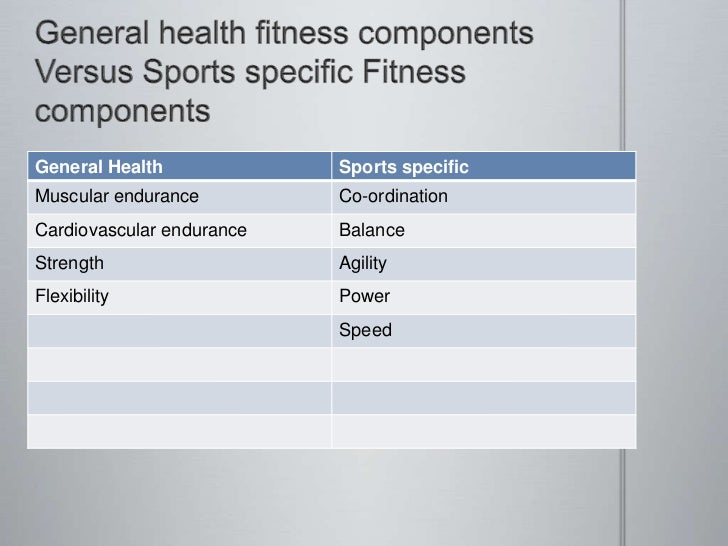
One of the most important training principles is that an increase in your motor potential must precede your capacity to utilise it in a sport specific regime. In layman’s terms you can think of your motor potential as your general fitness. If you prepare your body in a general sense first- you will be able to carry out the more explosive sport specific exercises later with a higher intensity and less injury potential.
General Fitness
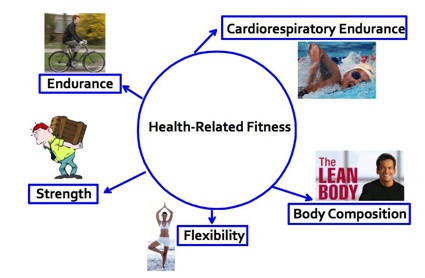
General fitness is also known as Health related Fitness and incorporates five key aspects- cardiovascular endurance, muscular endurance, muscular strength, flexibility and body composition (the proportion of muscle and fat you have). To be truly fit- either for everyday living or for sports performance- requires that all these elements are worked on and are either maintained at a healthy level or are continually improved beyond that level.
With focus on qualities such as suppleness, strength and stamina the body can adapt safely to gradual increases in intensity.
It’s about developing your motor potential.
The types of training methods to get your global muscles and energy systems prepared are quite similar across sports. Hence the term ‘general.’ Younger athletes and those with lower training histories would risk injury if they are exposed too early to too much sport specific fitness- which by it’s nature is very high intensity.
With these athletes I tend to train with linear periodisation (a topic for another day!) and bring it some more specific training nearer important competitions.
Sport Specific Fitness
Being fit for sport means being able to meet the physical demands of that sport. This can be thought of sport specific fitness.
To be fit for sport involves additional sport specific skills and physical attributes such as speed and power but these should be developed on top of a broad base of general fitness.
Athletes with high levels of preparedness will already have high levels of general fitness. I like to think of it as they have already filled their bucket of motor potential to the top.
Their strength, speed and stamina capacities are already very high so their training needs to be focused on more sport specific explosive training, and for more of their training time. This is about expressing their motor potential. With these athletes I use more concurrent periodisation which means there is always some power work in the programme but the bias shifts to more sport specific power and speed work nearer important competitions.
It is true that these sport specific attributes will help you to play harder and last longer. You will be more consistent and make better decisions under fatigue.
A lot of people who want to improve their sports performance for these reasons believe that they need to focus their time here- but be warned, if you don’t do the preparatory training and try and concentrate on these explosive methods of training such as sprinting, throwing and jumping you could injure yourself.
Play Sport to Get Fit
Also, even worse a lot of people believe will get all the speed and power work they will need by playing the sport. Firstly- this is a myth. There is no single sport that can fully develop one quality. Even a 100m sprint requires multiple types of speed. Instead check out these top tips to keep you on the right path.
5 Top Tips for getting Fit for Sport
Top Tip 1-Do a fitness test
Seek out a sports performance specialist such as a UKSCA accredited strength & conditioning coach who can assess your current levels in sport specific fitness.
Top Tip 2- Do Strength training
Let’s not forget that the demands from most sports place very high stresses on the body. Most people are not well conditioned to cope with these demands, but they can be handled better by doing appropriate strength training.
Top Tip 3- Do speed training
To fully develop speed and power you also need to train these attributes in isolation when you’re fresh to maximise their capacities. Playing sport isn’t enough.
Top Tip 4- Work on addressing your imbalances
To develop sport specific fitness without maintaining general fitness across all these parameters can lead to physical imbalances and even injuries. Most sports are one sided or over work certain muscles from repetitive use. So it is important to do work outside of the sport to correct these imbalances by following an injury prevention programme.
Top Tip 5- Plan your workouts
Working on general and sport specific fitness doesn’t mean you need to do seven different workouts to develop all the fitness attributes. Many fitness activities work one or more of these attributes at the same time. You just need a qualified coach to help you put the training programme together.
In summary
Sport places high demands on your body. Many of the injuries incurred are preventable. Make sure you invest in your fitness and get fit to play sport!
If you would like to be trained by a team who work with professional athletes which will assist you improve faster and win more then contact APA Director Daz Drake at: daz@apacoaching.co.uk www.athleticperformanceacademy.co.uk
https://athleticperformanceacademy.co.uk/wp-content/uploads/2014/07/djokovic.jpg454634dazdrakehttps://athleticperformanceacademy.co.uk/wp-content/uploads/2015/05/APA-Logo1-300x156.jpgdazdrake2017-01-12 12:08:162022-02-04 15:15:14What is sport specific fitness?
As it’s Christmas I thought I would put some more FREE content for you and share some drills you can use with your athletes to improve their Skill.
Physical Literacy
You’ve probably heard me mention it a lot on this blog but skill is a vital part of Fitness- Istan Balyi first described physical literacy as = movement skills + sports skills
I personally like to break down movement skills into:
Balance
Coordination
Reaction Speed
In all our syllabuses with our youth athlete group training programmes we spend 20 minutes developing skill, 20 minutes developing speed and 20 minutes developing strength. The skill section looks at balance, coordination and reaction speed.
FREE Training Videos
Reaction Speed
Coordination
https://athleticperformanceacademy.co.uk/wp-content/uploads/2016/07/YoutubeChannelArt-1.jpg14402560dazdrakehttps://athleticperformanceacademy.co.uk/wp-content/uploads/2015/05/APA-Logo1-300x156.jpgdazdrake2016-12-16 15:32:452018-05-27 20:12:30FREE Videos for Christmas!
And if that wasn’t enough I decided to film seven of my favourite reaction speed drills that you can go out and use with your athletes NOW!
Hope that gives you some ideas of how to develop a movement based programme that can support development of Skill.
Plus one of my colleagues sent me a link to a cool video which highlights the fastest Tennis athletes on the WTA and ATP Tour.
Check it out
If you’re not subscribed yet, click here to get free email updates, so we can stay in touch.
Share this post using the buttons on the top and bottom of the post. As one of this blog’s first readers, I’m not just hoping you’ll tell your friends about it. I’m counting on it.
Leave a comment, telling me where you’re struggling and how I can help
https://athleticperformanceacademy.co.uk/wp-content/uploads/2015/04/bigstock-Football-player-with-ball-in-a-59526716-Copy.jpg533800dazdrakehttps://athleticperformanceacademy.co.uk/wp-content/uploads/2015/05/APA-Logo1-300x156.jpgdazdrake2016-11-27 16:48:482018-05-27 20:12:31Reaction Speed Drills for Athletes
it’s been a while since I posted on Nutrition. This blog post is inspired by a recent visit to an Independent School to talk to some sport scholars about Nutrition. These young athletes were 13 and 14 years old and I wanted them to have a great overview of:
The fuel and hydration NEEDS of the BODY
The Six Principles of a HEALTHY BALANCED DIET
You can see the full presentation below. Full Disclaimer: It is 45 minutes long. If you want to focus on the Six Principles then fast forward to around the 25 minute mark!
Supplements
However, I also promised to give some further information about SUPPLEMENTS. As I always say I am NOT a Nutritionist or a Dietician- I am a Strength & Conditioning Coach. I can advise on basic principles but for further meal planning advice always consult an expert. For clarification on the differences between dieticians and nutritionists click HERE
In essence (AS WE ALWAYS KEEP SAYING TO OUR CLIENTS) Protein Powders and other supplements- are used to ‘supplement’ an already good healthy balanced diet. This should be the message that all Strength & Conditioning coaches give their clients. For example,
Protein Powder- use to supplement daily protein intake and increase convenience of having protein at every meal.
Greens supplement- use to supplement daily Fruit & Veg intake and increase convenience of having Fruit and vegetables every meal.
I think it is also important to use the correct supplement strategy that is appropriate for your goals. I’ve previously written some blogs about MUSCLE GAIN and FAT LOSS strategies.
The following blog focuses more on the fundamental supplements that everyone should take to support their energy needs for the workout as well as recovery after, regardless of whether your goal is muscle gain or fat loss.
PEAK Diet & Training SUMMIT DVD Set
I’ve previously written about my top supplements that I recommend to athletes to support their ‘workout nutrition’ needs which has been based on previous conversations I have had with Glen Kearney, Nutritionist at the Lawn tennis Association (LTA). Click HERE.
I also want to give credit to Dr. Mike Roussell. One of the best things I ever did was purchase The PEAK Diet & Training Summit DVD set. Tong Gentilcore wrote a pretty cool review Click HERE and HERE as did Eric Cressey Click HERE
Unfortunately I think Joe Dowdell and Dr Mike Roussell who hosted the seminar have pulled the product off line and it may no longer be available for sale. But in case you miss out here is the headlines on supplements
Core Supplements
Are you wondering what Dr. Mike’s “Core” list of supplements entail? It’s easy, protein powder, fish oil, greens supplement, multivitamin, vitamin D, and creatine. That’s it.
In terms of performance enhancers, he adds BCAAs, Beta Alanine, Caffeine (thank god!), and Citrillune Malate to the mix.
My thoughts- Amino Acids vs. Protein
I’d go along with the advice above. I do just want to focus on the Performance Enhancing supplements of Branch Chain Amino Acids.
All proteins are made up of single molecules of amino acids. There are nine essential amino acids which make up a complete protein.
Essential amino acids
Essential amino acids cannot be made by the body. As a result, they must come from food.
The 9 essential amino acids are: histidine, isoleucine, leucine, lysine, methionine, phenylalanine, threonine, tryptophan, and valine.
Animal-based protein like meat, poultry, fish, eggs, milk, and cheese are considered complete proteins. Quinoa and soy are plant-based complete proteins. … Most plant-based sources of protein are considered to be incomplete because they are low in one or more essential amino acids.
Protein Powders: Whey Proteins
Milk is made of two proteins, casein and whey. Whey protein can be separated from the casein in milk or formed as a by-product of cheese making.
In the production of cheese from milk, whey protein is left over. Following some pretty cool processing this can be converted to a protein powder which can be up to 90% protein concentration. Whey protein is considered a complete protein and contains all 9 essential amino acids and is low in lactose content.
See here for more information on WHEY PROTEIN. This is a great way to boot your complete protein intake.
Amino Acids:
Amino acids supplements usually contain 3 essential amino acids that are often referred to as ‘Branch Chain Amino Acids (BCAA).’ These are Leucine, Isoleucine and Valine.
REMEMBER- although BCAA’s are the building blocks of proteins, they are not actually proteins themselves. Just taking a BCAA supplement means you’re missing 6 of the 9 ‘essential’ amino acids still — a ‘complete’ protein contains all the ‘essential’ amino acids.
Seeing as Amino Acids are essentially the building blocks of Proteins it is worth considering why you might want to buy both!!! LiveStrong.com write a pretty cool article which highlights the differences.
Basically, Protein powders and amino acid supplements deliver different results. Protein powders boost your total protein and contribute calories, so they support muscle building and can fill in gaps in your diet. Amino acids target very specific and diverse areas of your metabolism.
Generally speaking I recommend BCAA in two strategies-
For maximising muscle protein synthesis– during HEAVY STRENGTH TRAINING BLOCKS. Rather than having only protein powder post-workout, you can supplement extra BCAA (with or without carbohydrates) in your pre and during workout shake.
For increasing Fat oxidation/support energy needs during glycogen depleted intense exercise. Clients may get an energy boost from taking them but with minimal calories which might be desirable if carbs have been removed from workout shakes.
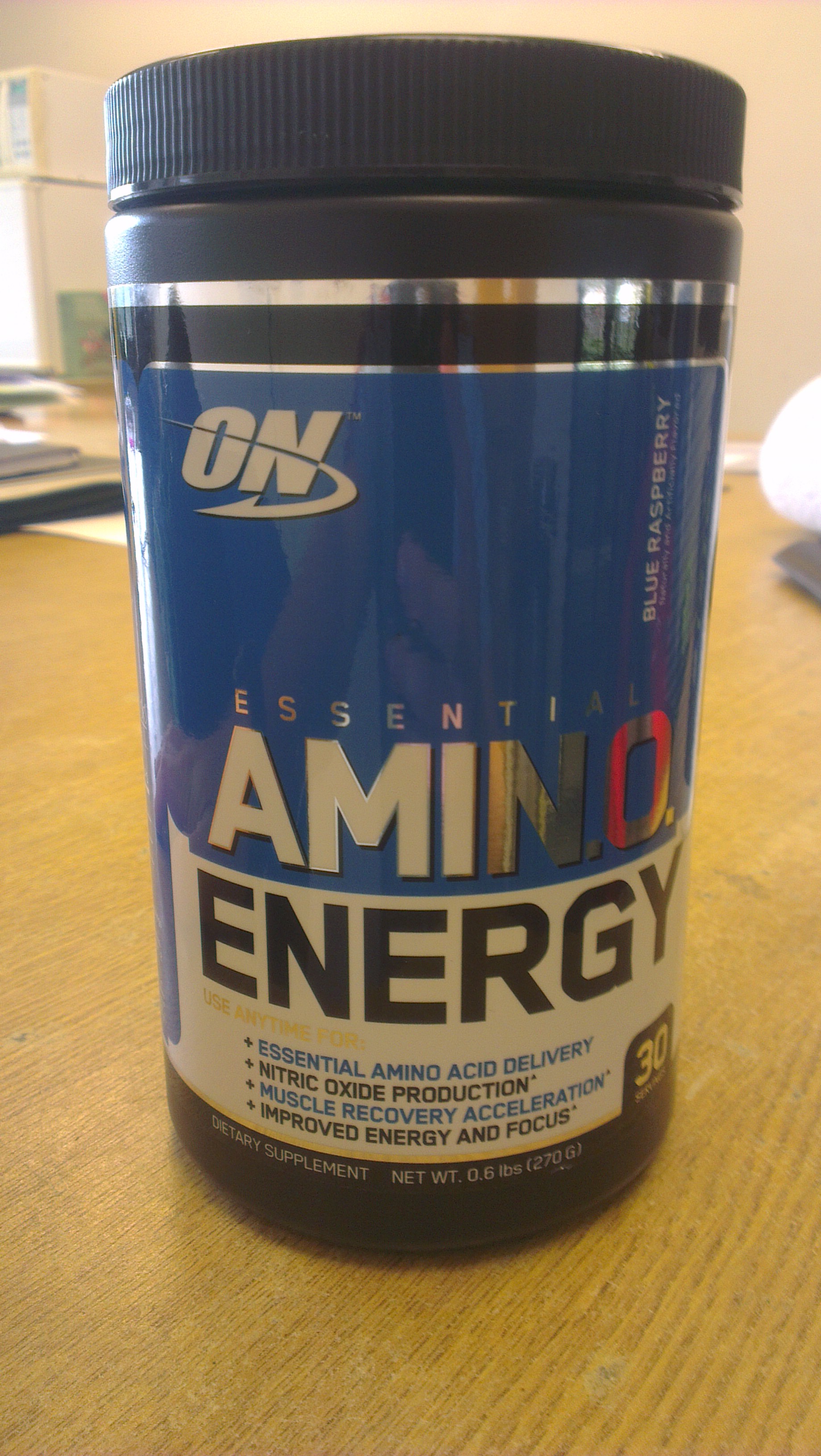
I particularly like Optimum Nutrition’s Essential Amino Energy as it also contains Caffeine in addition to Beta Alanine.
I won’t go into massive detail about these performance enhancers here but basically Beta Alanine (an amino acid BUT not essential amino acid) combines with histidine to form carnosine. This has been thought to quench acid build up in working muscles (buffers pH to prevent decreases in muscle function).
Caffeine has also been shown to have CNS and neuromuscular effects such as decreased perception of fatigue and possibly stimulating fat loss as well.
Other products you might here about
Carnitine is a substance found in almost every cell in the body, it is biosynthesized from the amino acids lysine and methionine. The compound plays a crucial role in energy production, as it is responsible for transporting fatty acids to the mitochondria. Look out for L-Carnitine
Glutamine is the most common amino acid found in your muscles – over 61% of skeletal muscle is Glutamine. Glutamine consists of 19% nitrogen, making it the primary transporter of nitrogen into your muscle cells.
First used in powder form by people in the fitness industry who were looking to preserve muscle tissue, L-glutamine is an amino acid that is a building block of protein. L-glutamine is the most abundant amino acid in the bloodstream and it makes up 30-35 percent of the amino acid nitrogen in your blood.
I personally tend to direct clients to protein powder and BCAAs first. But some fitness professionals swear by these (although there is less research out there on these supplements). DO YOUR OWN RESEARCH.
Recommended Nutritional Suppliers:
I recently came across PREDATOR NUTRITION. A Sports Nutrition Business founded in 2009 and based in Leeds, UK.
I have to say they sell the best brands from around the world including some that I have previously recommended including Optimum Nutrition.
Take a look at some of their recommended product ranges which include:
https://athleticperformanceacademy.co.uk/wp-content/uploads/2016/11/predator-nutrition-logo2.png400400dazdrakehttps://athleticperformanceacademy.co.uk/wp-content/uploads/2015/05/APA-Logo1-300x156.jpgdazdrake2016-11-20 10:41:442018-05-27 20:12:33Nutrition 101: What supplements should you take?
This week I have had the privilege to guest lecture at the University of Hertfordshire Sports Studies 1st year and 3rd year coaching modules. The topic was ‘The Art of Coaching: How to Communicate Effectively.’ For ideas on this topic feel free to read the previous blog on this topic.
One of the great things about watching other coaches is you can pick up some cool ideas for drills – a lot of the drills I saw were games based. This was great for me to see as I often tend to coach through technical drills and I feel I need to open up the drills sooner into challenges/games which include more decision making. The use of decision making was the inspiration for this blog, and was something I referred to a lot in my recent workshop.
Workshop Review
This weekend I presented on the second in the APA series of workshops, ‘Coordination and Strength training for Sports.‘ Because the majority of attendees were tennis coaches and the focus of their work was with young athletes we focused on the area of skill, specifically coordination. Later on I’ll come back to the role of decision making.
I wanted to achieve a few objectives in this workshop:
Define Athleticism and Skill
Discuss theoretical concepts of skill acquisition
Show some drills to develop Skill
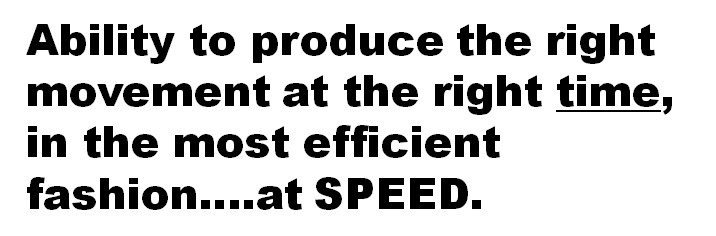
Definition of Athleticism:
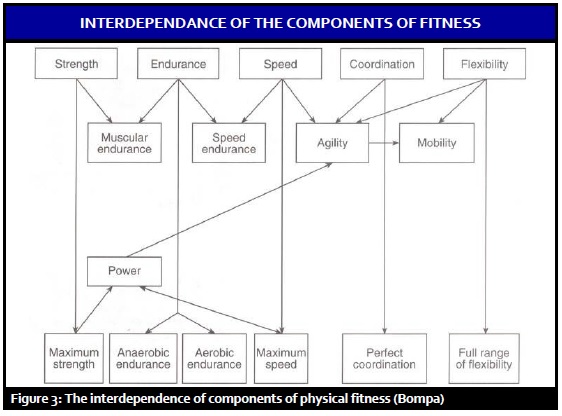
This was our start point……..I then wanted to build on this concept of ‘movement’ and go a step further by talking about movements that involve constant shifts in someone’s centre of gravity.
This was where we discussed AGILITY.
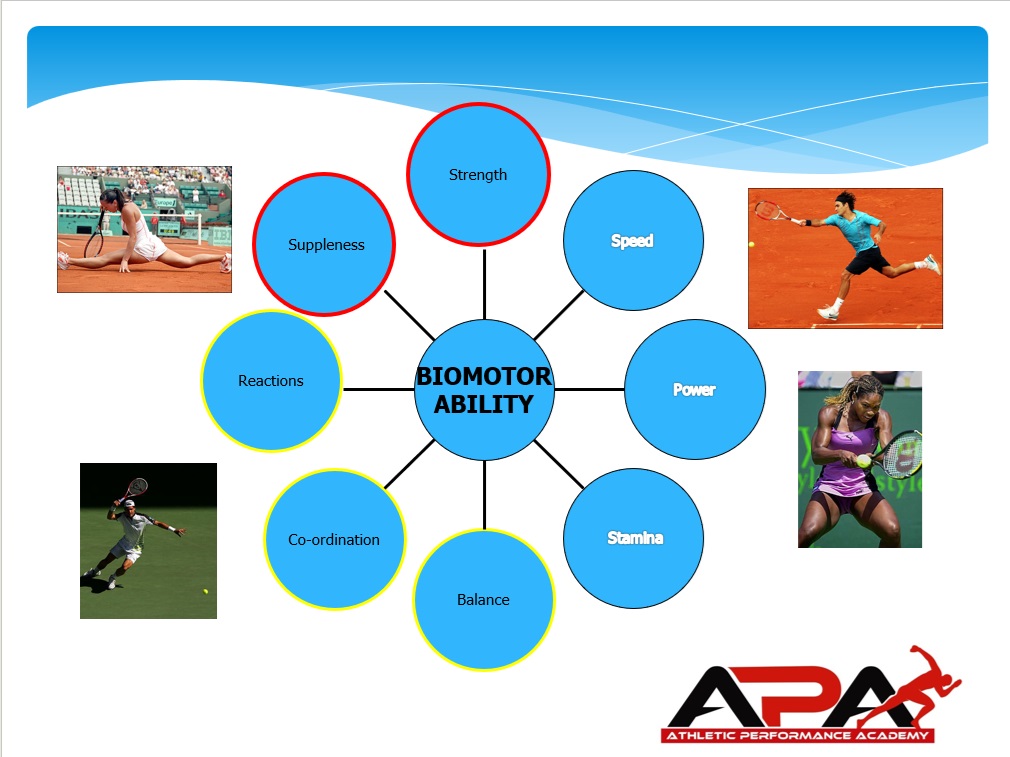
I wanted to highlight that the components of Fitness in the centre of the diagram are higher order components that are built on the foundation components of Fitness around the outside of the diagram. If you look closely you will see that there are more arrows pointing back into Agility. Agility is an expression of:
Power
Speed
Coordination
Flexibility
In today’s workshop we focused on the ‘Coordination component.’
Definition of Skill:
I introduced the concept of Skill with it’s sub-components (at APA we also talk about Balance and Reaction Speed)
Balance
Coordination
Reaction Speed
Balance:
Static Balance- drills where you are stationary.
Dynamic Balance – where you are in motion and have to bring yourself to a stop either in response to a cue or following completion of a movement sequence.
Coordination:
Locomotive and Manipulative.
Locomotion- movement skills that are designed to get you from A to B.
Manipulation- movement skills which involve the sending or receiving of objects such as kicking/striking/throwing/catching
Reaction speed:
Response time is the sum of reaction time and movement time. Focus on skills that challenge reaction time. It doesn’t necessarily have to involve locomotive tasks – in fact in the beginning it can simply involve tasks that can be performed stationary.
Simple reaction time is the motion required for an observer to respond to the presence of a stimulus. For example, a subject might be asked to press a button as soon as a light or sound appears. Mean RT for college-age individuals is about 160 milliseconds to detect an auditory stimulus, and approximately 190 milliseconds to detect visual stimulus.
Theoretical concepts of Skill Acquisition:
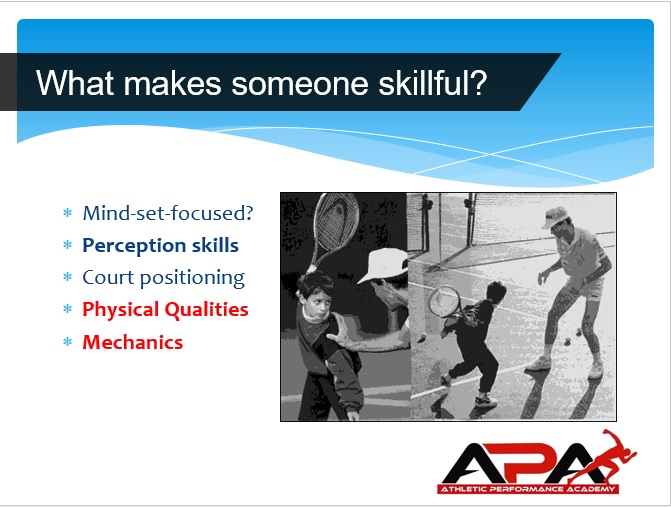
We can all agree on one thing – whatever coaching philosophy we have when it comes to developing movement skills – the outcome we all want is a permanent change/improvement in the way the (tennis) athlete moves on the court. We want to directly or indirectly enhance the quality of movement where it actually counts- on the field of play.
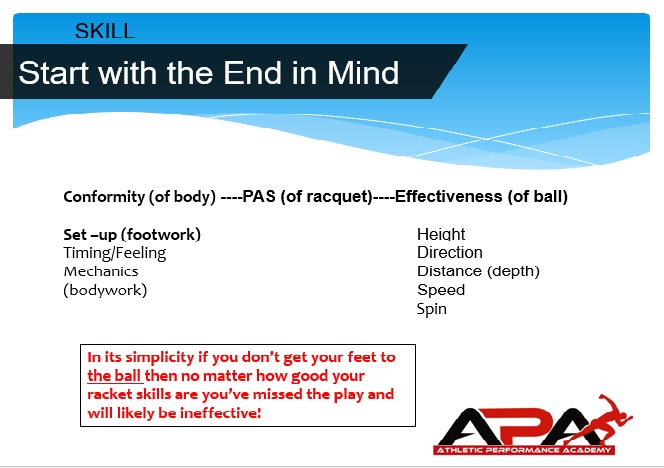
The slide above is basically saying that while the racquet skills (sport skills) are critical to getting the outcomes you want in terms of effectiveness of ball, they need to be supported by effective footwork (movement skills). It’s because of this that I wanted to talk about methods to develop movement skills that transfer to on court performance. Therefore in the workshop presentation and practical I discuss different aspects of Skill development.
Perception Skills:
In the video below there is a strong case made for the need to train cognitive/perceptual responses to a stimulus in order to call it Agility training – otherwise it is just change of direction. This is why the reaction speed component of skill is something that we bring in early to challenge the athlete’s decision making ability as a precursor for Agility training.
Video: courtesy of Sport Science Collective
It says there is recent research to suggest that there are no significant difference in change of direction test performance between higher and lower level athletes.
It goes on to say that neither strength/power training or change of direction training enhance Agility.
It highlights that Agility training includes technical components such as foot placement and body lean and posture, as well as physical components such as core strength, straight speed, and leg muscles qualities (Strength, Power and Reactive Strength)
Yet despite the physical components research indicates that training for strength and power does not enhance agility.
So how do we train for agility?
The cognitive component is highly trainable through use of drills involving decision making and small sided games.
ie., Add a perceptual challenge to a technical task- such as first step speed drill in response to a visual cue
Video: courtesy of T&K Tennis Team Tunisia
Technical and Physical Skills:
But before we all hurry to our play book of games I don’t think we should underplay the role of the other components. The technical components relate to kinematic aspects of skill which can be coached and corrected with almost immediate technical feedback (teaching). The physical components relate to kinetics aspects of skill which require longer term practice to overload the muscular skeletal system (training). I see the cognitive components as just another aspect of skill development where you can perform the skill under decision making pressure (performing).
Video: courtesy of E.M-Sports Science
Then the final expression of the skill is the actual sport itself. So at APA the skill development model for speed might look like this:
Basic 1– teach the technical components of foot placement and body lean in more stationary positions (see video above- E.M-Sports Science)
Basic 2– teach the technical components of foot placement and body lean in more dynamic positions
Basic 3– train the technical components using combinations of movements (complexity) and decision making pressure (add the perceptual component- see the video T&K Tennis Team Tunisia)
Advanced– train the physical components using overload stimulus (resistance) and later repetition (fatigue)
All all times the final skill can be tested in games based environments to keep engagement levels up and measure progress
Final point: Implicit and Explicit Teaching Methods
An effective coach will use drills that firstly engage the athlete – we want our athletes to be ENGAGED by the task, whether that be a maximal effort, or a really difficult challenge in some other way. Sports related skills are what excite the athlete so we need to find ways to tap into that sort of feeling in S&C with engaging tasks! What makes sport so compelling is the competitive element, the chaos and the constant mental stimulation and decision making!!
Focus on the Outcome and the Process takes care of itself:
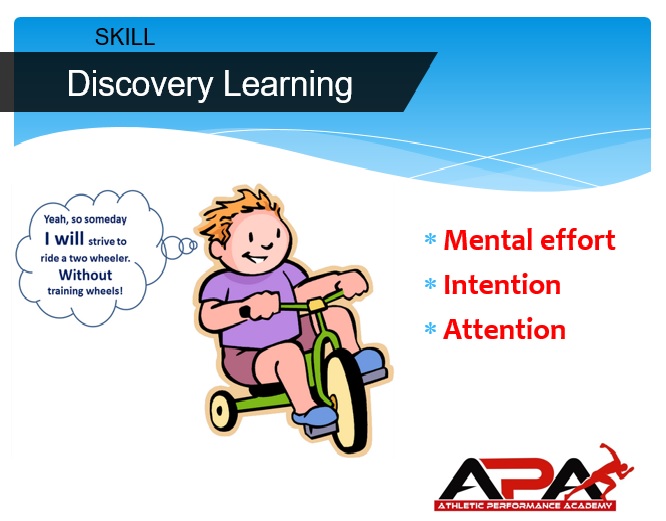
There then needs to be a clear OUTCOME, the INTENTION– The athlete is clear on what they are trying to accomplish. What do you want them to be able to do? In tennis this is obvious, get behind the ball and beat the bounce; it’s especially important to have the right intent in that situation because intent drives visual focus!!! But what about in S&C?
It could be a time based goal – beat your best time, or win a race.
It could be to catch a ball without it bouncing twice or dropping below waist height
It could be a distance based goal – jump or throw a certain distance
It could be a reps based goal- achieve a certain number of reps in a certain time
The we come to the PROCESS- the ATTENTION
This is an area I feel I may have over coached.
Focus on a few External cues – where you want to get your body to (external) rather than how to get there (internal).
I feel I have put too much emphasis on drawing the athlete’s attention to a lot of internal factors (such as range of motion, control of the load, bracing, breathing and alignment/foot position). This creates a high level of awareness of what the BODY is doing in relation to the ground. The coaching is very Explicit. It might be better to select a FEW KEY COACHING CUES.
I still feel technical components need to be worked on without a perceptual challenge in many cases, however. For example, if the athlete appears to lack the coordination to organise themselves both with or without a perceptual stimuli. It may also have a use in developing symmetry in the body. But I think we need to bring in perceptual challenge too- probably a lot sooner than I have done and it is more engaging for the athlete.
The video below is an example of a common approach I have taken which is entirely focused on awareness of what the feet are doing. I actually define the spacing of the feet with physical barriers. The opportunity for Discovery Learning is eliminated because I am telling them where to put their feet. But my rational has been that it is effective coaching because the hoops/hurdles coach the drill for me by forcing the athlete to use the correct footwork. This certainly works better than trying to ‘tell’ them where to put their feet – or do it by copying me.
But there is no cognitive component in terms of visual stimulus to respond to. When we actually play tennis we don’t want to be paying attention to our feet while hitting a ball- we want to focus on the ball.
The key thing here is the need to develop a ‘non-awareness’ strategy. We don’t want the athlete to pay attention on the task while it is in progress. Ives and Shelley (2003) advocate against athletes focusing on themselves – e.g. looking in a mirror/or at their feet – but would rather have mental effort directed towards strategies and cues relevant to sports specific performance (i.e., focus on the ball).
In the video below the athlete is practising a vertical jump but has their attention placed on a visual focus above them which gives a better indication of how they would move in an open sports environment. The video above could simply be performed with the athlete moving to hit/catch a tennis ball.
Start with the End in Mind:
Secondly- I feel I have been guilty of breaking skills down often without firstly examining how close the athlete is to performing the final skill. I came out of the Whole-part-Whole school of skill acquisition. But from conversations with colleagues it might be said that the most effective coach is the one that gets the athlete to the final skill the quickest. Only break down if you have to, and even then consider trying keeping the final skill but just make it a little bit easier (e.g slow the movement down or give more time etc).
So if someone appears to have a poor process- first check you have given them a sufficiently challenging outcome to reach and give them a few goes to achieve the outcome before you decide to break down the process. It’s amazing what someone is capable of if they are challenged to achieve the final skill. Also try to give them as few cues as possible to make the changes- you may find that you can draw attention to just a few simple cues to make the corrections without a drill rather than having to stop the drill and break it down.
https://athleticperformanceacademy.co.uk/wp-content/uploads/2016/08/5S-Biomotors.jpg7571010dazdrakehttps://athleticperformanceacademy.co.uk/wp-content/uploads/2015/05/APA-Logo1-300x156.jpgdazdrake2016-10-24 17:06:152024-09-27 07:08:50What is athleticism and have you got some?
We may request cookies to be set on your device. We use cookies to let us know when you visit our websites, how you interact with us, to enrich your user experience, and to customize your relationship with our website.
Click on the different category headings to find out more. You can also change some of your preferences. Note that blocking some types of cookies may impact your experience on our websites and the services we are able to offer.
Essential Website Cookies
These cookies are strictly necessary to provide you with services available through our website and to use some of its features.
Because these cookies are strictly necessary to deliver the website, refuseing them will have impact how our site functions. You always can block or delete cookies by changing your browser settings and force blocking all cookies on this website. But this will always prompt you to accept/refuse cookies when revisiting our site.
We fully respect if you want to refuse cookies but to avoid asking you again and again kindly allow us to store a cookie for that. You are free to opt out any time or opt in for other cookies to get a better experience. If you refuse cookies we will remove all set cookies in our domain.
We provide you with a list of stored cookies on your computer in our domain so you can check what we stored. Due to security reasons we are not able to show or modify cookies from other domains. You can check these in your browser security settings.
Google Analytics Cookies
These cookies collect information that is used either in aggregate form to help us understand how our website is being used or how effective our marketing campaigns are, or to help us customize our website and application for you in order to enhance your experience.
If you do not want that we track your visit to our site you can disable tracking in your browser here:
Other external services
We also use different external services like Google Webfonts, Google Maps, and external Video providers. Since these providers may collect personal data like your IP address we allow you to block them here. Please be aware that this might heavily reduce the functionality and appearance of our site. Changes will take effect once you reload the page.
Google Webfont Settings:
Google Map Settings:
Google reCaptcha Settings:
Vimeo and Youtube video embeds:
Other cookies
The following cookies are also needed - You can choose if you want to allow them:
Privacy Policy
You can read about our cookies and privacy settings in detail on our Privacy Policy Page.